The gap
Children living on the streets were too often approached as a public-order concern rather than recognised as children in need of protection. Authorities could identify risk, but a dependable protective pathway was not always available.
 Rescue Mission
RMFSL began with a question of protection: where could police, probation officers and local authorities lawfully refer a child living on the street when that child needed safety, care and a pathway home? The answer became an approved children’s home and, over time, an integrated system for recovery, family readiness and lasting reintegration.
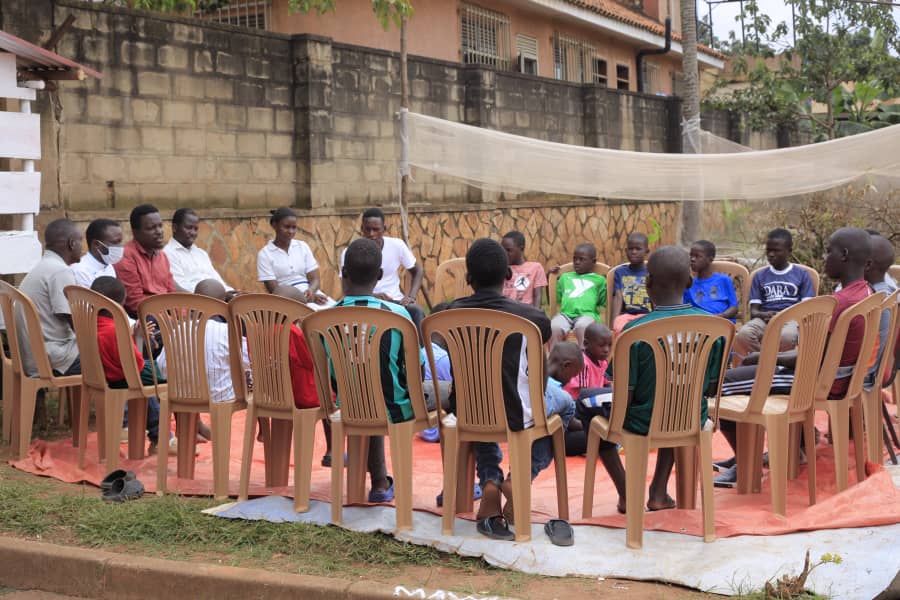
Children living on the streets were too often approached as a public-order concern rather than recognised as children in need of protection. Authorities could identify risk, but a dependable protective pathway was not always available.
RMFSL was established to provide a safe and lawful place where authorised child-protection actors could refer children. Protection begins with immediate safety, but it cannot end at admission or removal from the street.
Experience showed that rescue alone does not secure a child’s future. Children need time to stabilise and recover. Caregivers need preparation. Education, family and livelihood transitions need to be planned rather than assumed.
RMFSL connected safe referral, structured recovery, caregiver readiness and verified return into one child-protection pathway. Each stage prepares the child and family for what comes next.
That response has grown into a trauma-informed child-protection organisation connecting ThriveSpace™, ThriveWell™, ThriveMeasure™ and ThrivePath™ with education and livelihood pathways. The governing principle remains clear: healing before reintegration, readiness before return.
RMFSL is strengthening a model in which every referral leads toward recovery, every transition is informed by readiness, and every return is followed to determine whether safety and stability hold.