Child indicators
Emotional regulation, cooperation and social connection are observed through everyday participation and structured recovery activities.
 Rescue Mission
ThriveMeasure tracks behavioural signals in children and caregivers so that decisions are based on repeated observation rather than assumption.
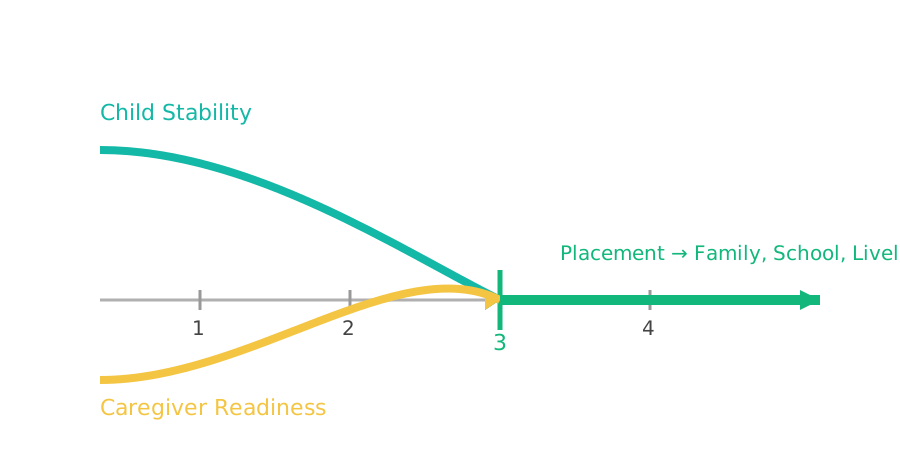
Emotional regulation, cooperation and social connection are observed through everyday participation and structured recovery activities.
Reflection, understanding and routine show whether a caregiver can recognise needs, respond consistently and support a safer return.
Indicators are scored from 1 to 4. Transition is considered when the relevant average reaches at least 3; the score informs professional judgment rather than replacing it.
Child behaviour is observed over approximately three weeks. Caregiver readiness is observed over two to three weeks so decisions do not rest on a single interaction.
When safety or readiness remains unclear, transition can wait. A delay is a protective decision, not a programme failure.
Important decisions should be explainable, documented and reviewed. ThriveMeasure strengthens consistency while safeguarding case-by-case judgment.