How guided play, movement and storytelling can form a structured recovery pathway rather than a stand-alone activity.
Why healing can begin with play
Children who have lived through street exposure, violence, neglect, exploitation or repeated separation may not be ready to explain what happened through direct conversation. Some do not yet have the words. Others have learned that silence, withdrawal or constant alertness helps them survive. Asking for disclosure before safety and trust are established can create pressure rather than recovery.
Play offers another starting point. Through movement, rhythm, games, drawing, music and storytelling, children can participate without being required to recount painful experiences. They can make choices, test relationships, experience predictable boundaries and reconnect with parts of childhood that crisis has interrupted.
This does not mean that every game is therapeutic or that play replaces professional care. It means that carefully guided, developmentally appropriate activity can create the conditions in which recovery becomes possible.
From an activity to a recovery pathway
A single joyful session may matter to a child, but it does not by itself demonstrate recovery. RMFSL therefore treats structured play as a pathway rather than an occasional event. Activities are selected and facilitated within a wider child-protection plan, with clear routines, trained adults, repeated observation and connection to the child’s next safe transition.
Through ThriveWell™, RMFSL uses guided play, storytelling, music, movement and group expression to support emotional regulation, behavioural regulation and social cooperation. The purpose is not entertainment alone. Each session gives children a safe opportunity to practise participation, connection, problem-solving and response to boundaries.
The pathway progresses through three connected stages: ThriveCircle™, AmplifierCircle™ and ExitCircle™. Children move according to observed readiness, not simply because a fixed number of sessions has passed.
ThriveCircle: safety before expression
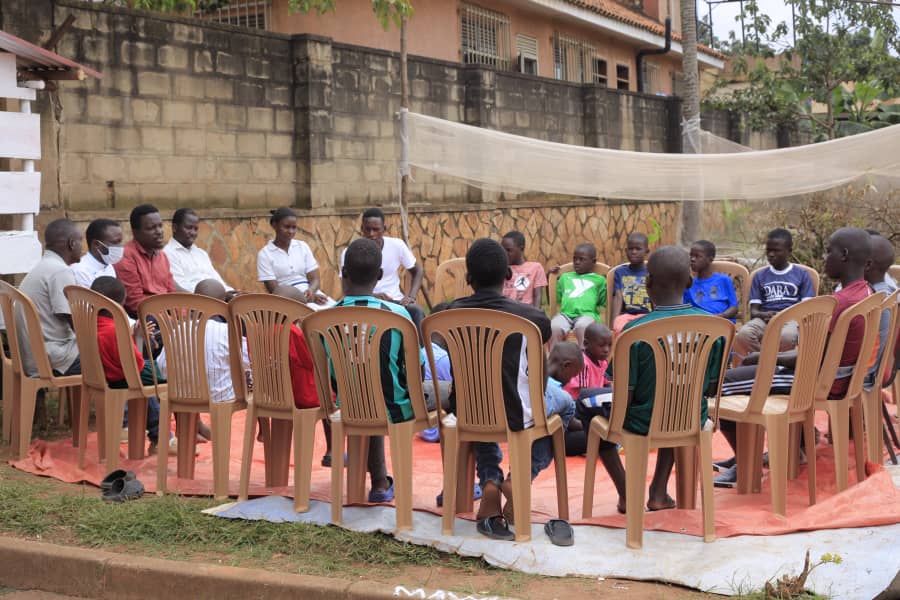
Recovery begins with predictability. In ThriveCircle, children enter a consistent group space with familiar opening and closing routines, clear expectations and adults whose responses are calm and dependable. Activities are accessible and low-pressure so that a child can join gradually without being forced to perform, speak or disclose.
At this stage, participation itself can be meaningful. A child may begin by watching from the edge, then imitate a movement, accept a turn or remain in the circle for longer. Facilitators notice how the child responds to proximity, choice, frustration, encouragement and group boundaries.
The goal is not to produce an immediate emotional breakthrough. It is to establish enough safety for trust, curiosity and connection to begin returning.
AmplifierCircle: practising regulation and relationship
As participation becomes more stable, AmplifierCircle introduces activities that deepen cooperation, reflection and emotional expression. Team games, movement sequences, role play, music, story-building and problem-solving create manageable challenges within a supported environment.
These activities allow children to practise waiting, taking turns, negotiating, recovering after disappointment and seeking help. Facilitators can observe whether a child is increasingly able to regulate strong emotion, follow shared expectations and reconnect after conflict or frustration.
The word amplifier reflects the purpose of this stage: to strengthen emerging capacities through repetition. One calm response is encouraging, but repeated responses across different activities offer stronger evidence that change is becoming more dependable.
ExitCircle: connecting recovery to daily life
Recovery should prepare a child for life beyond the session. ExitCircle connects the capacities practised through play with the routines and relationships the child may meet in a family, school or livelihood setting.
Activities may explore asking for help, responding to correction, managing conflict, completing a shared task, following a routine or expressing a need safely. Children are supported to recognise the strategies that help them regulate and the trusted adults they can approach when a situation becomes difficult.
ExitCircle is not a graduation ceremony based on good behaviour. It is a period of transition preparation. The question is whether the child’s growing stability can travel with them into the next environment.
Making recovery observable
Major child-protection decisions should not rest on a child appearing happy during one activity. RMFSL combines structured play with repeated behavioural observation through ThriveMeasure™. Practitioners look for patterns in emotional regulation, behavioural regulation and social cooperation over time.
Observation asks practical questions. Can the child recover after frustration? Can they participate without harming themselves or others? Can they cooperate, accept a boundary, communicate a need and reconnect after conflict? The answers are considered alongside case information, safeguarding assessment and professional judgment.
ThriveMeasure uses a four-point scale and a transition threshold of at least three across the relevant indicators. The score supports consistency; it does not replace the judgment of trained child-protection practitioners or authorised case-management processes. When safety or readiness remains uncertain, transition can wait.
The caregiver must be part of recovery
A child may become more stable while the receiving home remains unprepared. Lasting reintegration therefore requires work with caregivers as well as children. RMFSL considers caregiver reflection, understanding and routine: whether the caregiver can recognise the child’s needs, understand how trauma may affect behaviour and provide consistent, non-harmful responses.
Caregiver preparation helps translate the principles of recovery into ordinary family life. Predictable routines, constructive responses to difficult behaviour, time for communication and connection to school or livelihood support all influence whether progress continues after return.
The child should not carry the entire responsibility for making reintegration succeed. Readiness must exist on both sides of the return.
Play within a complete protection pathway
Structured play is most credible when it is connected to protection before the session and verification after transition. At RMFSL, children enter through recognised child-protection pathways and receive safety, care and case planning through ThriveSpace™. ThriveWell supports recovery. ThriveMeasure strengthens readiness decisions. ThrivePath™ prepares transition and follows outcomes at 4, 8 and 12 weeks.
Together, these elements form one pathway: Recovery → Readiness → Return → Verification. Play is not presented as a quick cure for trauma. It is a disciplined, child-centred practice within a larger system of protection, family strengthening and follow-up.
This distinction matters. A stand-alone activity can create a positive moment. A structured pathway uses those moments to build, observe and carry recovery towards a safer and more lasting future.
What good practice requires
Play-based recovery should protect dignity and avoid forcing disclosure, publicising a child’s story or using distress as evidence of impact. Activities should be age-appropriate, culturally grounded, facilitated by prepared adults and adapted to the child’s abilities, safety needs and stage of recovery.
Practitioners should distinguish observation from diagnosis and know when specialised mental-health or medical referral is needed. Records should describe patterns carefully, preserve confidentiality and contribute to lawful case planning rather than label a child.
Most importantly, the measure of success is not how lively a session appears. It is whether the child is becoming safer, more connected and better prepared for family, education or livelihood participation—and whether that progress continues after transition.
Healing before reintegration
For street-connected and highly vulnerable children, recovery often begins before words are available. A predictable circle, a shared rhythm, a story completed together or a game in which trust is honoured can become a first step back towards safety and belonging.
When guided play is structured, repeated and connected to observation, caregiver preparation and follow-up, it becomes more than recreation. It becomes part of a credible trauma-informed child-protection pathway.
Getting a child off the street is not the same as getting a child safely home. Healing must come before reintegration, readiness before return, and every return should be followed.